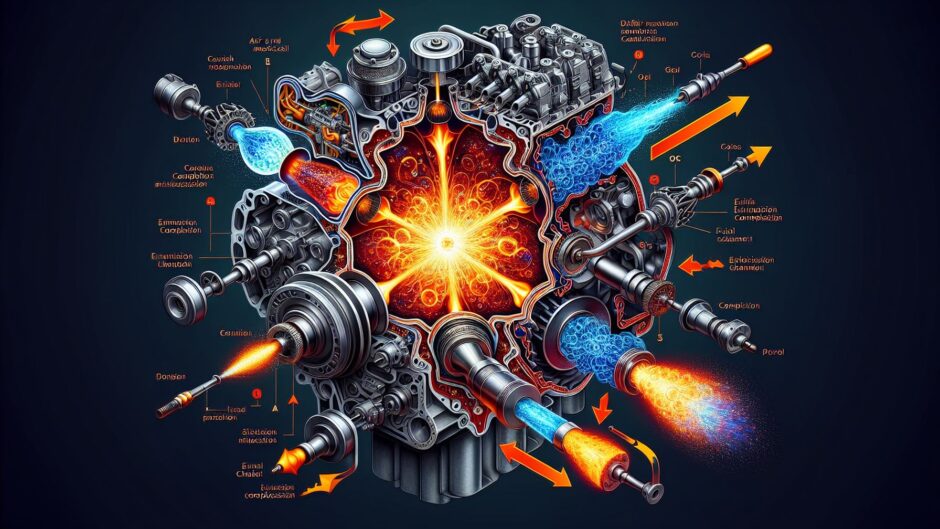
Welcome fellow professionals in the automotive industry! Today, we are diving into the exciting world of engine combustion. As experts in the field, we understand the importance of this process in powering vehicles and ensuring optimal performance. But let’s take a closer look at how engine combustion actually works and why it is so essential in the world of automobiles.
At the heart of every engine is the combustion chamber, where the magic happens. When fuel is mixed with air and ignited, a controlled explosion occurs, converting chemical energy into mechanical energy. This process generates the power needed to drive the vehicle forward, and it all starts with the spark plug.
The spark plug plays a crucial role in initiating the combustion process. As the fuel-air mixture is compressed in the combustion chamber, the spark plug creates a spark that ignites the mixture, resulting in the explosion that drives the piston down. This rapid movement of the piston generates the rotational motion needed to power the vehicle.
But what exactly is happening during this explosion? The combustion of fuel and air is a highly complex chemical reaction that involves the breaking and forming of molecular bonds. When the spark ignites the fuel-air mixture, carbon and hydrogen atoms combine with oxygen atoms to produce carbon dioxide and water vapor, releasing a large amount of heat in the process. This rapid expansion of hot gases pushes the piston down, creating the mechanical energy that drives the vehicle.
As professionals in the industry, it is crucial for us to understand the intricacies of engine combustion in order to optimize performance and efficiency. By carefully tuning the air-fuel mixture, ignition timing, and compression ratio, we can ensure that the combustion process is smooth and efficient, resulting in maximum power output and minimal emissions.
Car manufacturers are constantly striving to improve engine combustion through innovative technologies and design enhancements. From direct fuel injection to turbocharging, these advancements aim to increase the efficiency and power output of engines while reducing emissions. By staying up-to-date on the latest developments in engine technology, we can continue to push the boundaries of performance and sustainability in the automotive industry.
Regular maintenance and servicing are also essential in ensuring optimal engine combustion. Dirty air filters, worn spark plugs, and clogged fuel injectors can all hinder the combustion process and lead to poor performance and reduced fuel efficiency. By following the manufacturer’s recommended maintenance schedule and using high-quality fuels and lubricants, we can keep engines running smoothly and efficiently.
In conclusion, engine combustion is the heart and soul of any vehicle, driving performance and powering us forward. As professionals in the automotive industry, it is our responsibility to understand and optimize this crucial process to ensure that vehicles perform at their best. By staying informed on the latest technologies and advancements in engine combustion, we can continue to push the boundaries of performance and efficiency in the world of automobiles. So let’s rev up our engines and embrace the thrilling chemistry of combustion!