For an avid fan, there’s nothing more satisfying than the purr of a well-tuned car engine or the guttural roar of a revving throttle. Modern car engines, from those in our everyday family sedans to high-performance race cars and treasured classic cars, all operate on the same basic principles.
Introduction
The core function of the car engine is simple, convert fuel into motion. However, the execution of that simple premise involves a symphony of finely tuned parts working in harmony. An understanding of this magnificent piece of mechanical ingenuity deepens our appreciation for the wonderful beasts we drive.
The Heart of an Engine: Its Core Components
A car engine seems like a complex entity, and while there are plenty of intricate details, most engines share the same basic core components. Of course, whether you’re dealing with automotive repair or contemplating the addition of a classic car to your collection, a fundamental knowledge of these parts greatly simplifies matters.
Cylinders
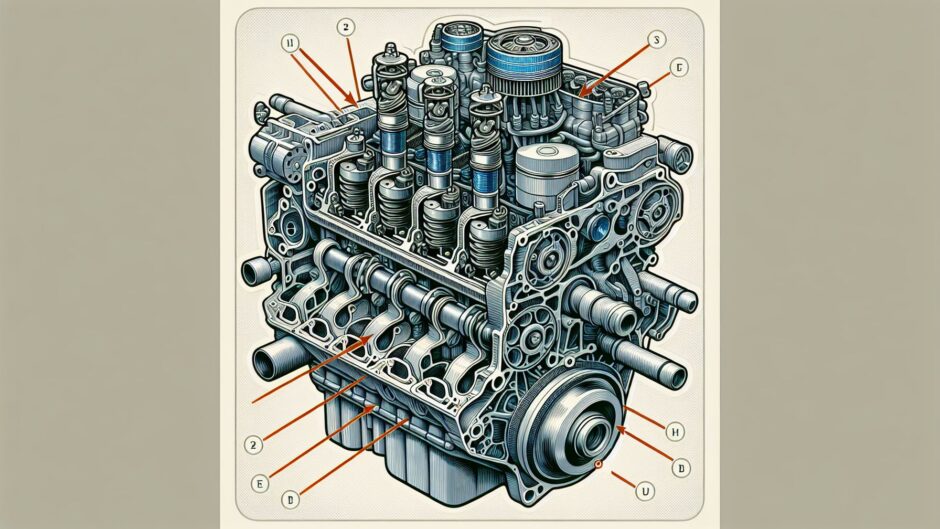
Simply put, the cylinders are the power factories of the engine. Most cars have between four and eight cylinders arranged either in a straight line, known as an inline engine, or in two lines arranged in a ‘V’ or ‘flat’ configuration. Classic cars, particularly American muscle cars, may often have a V6 or V8 engine. Each cylinder houses a piston that moves up and down.
Pistons
Pistons, typically made of lightweight but robust materials, create a set of reciprocal movements inside the cylinder. As the piston moves downwards, it creates a vacuum sucking in a fuel and air mixture. On its upward stroke, the piston compresses this mixture which is then ignited, generating a mini explosion that drives the piston back down. This process is commonly known as internal combustion and is the crux of how the car engine operates.
Crankshaft
Connected to the pistons by a series of connecting rods, the crankshaft takes the pistons’ up-and-down movements and turns them into a circular motion that can then drive the wheels.
Valvetrain
The valves maintain the flow of the air and fuel mixture into and out of the cylinders. There are two sets of valves: intake and exhaust valves with the former letting the mixture in and the latter allowing the exhaust gases to leave.
How Everything Comes Together
Together, these elements create a cycle of intake, compression, combustion, and exhaust (known as the four-stroke cycle) that propel our cars forward.
- Intake: The piston moves down the cylinder, drawing in a fuel-air mixture.
- Compression: The piston moves back up, compressing the mixture.
- Combustion: A spark from the spark plug ignites the mixture, causing an explosion that forces the piston down and turns the crankshaft.
- Exhaust: The remaining gases are expelled through the exhaust valve as the piston moves back up.
The beauty of this system is its scalability; the same principles apply whether you’re dealing with a small four-cylinder engine or the powerful heart of a classic car’s V8.
Conclusion
The car engine, the heart and soul of every vehicle we drive, operates on a beautifully intricate yet understandable system. A knowledge of the four-stroke cycle and the primary components involved provides an enriched appreciation for automotive technology and the engineering marvel behind every drive.
The passion for understanding the machines we love, especially for classic cars, surpasses the practical need for automotive repair. The more we delve into the inner workings of the car engine, the more it unfolds a romance that only true admirers comprehend. Knowledge is not just power – it’s an enabler for our love and appreciation for these four-wheeled marvels! So, here’s to our unabated love for cars, and long may the engines roar.