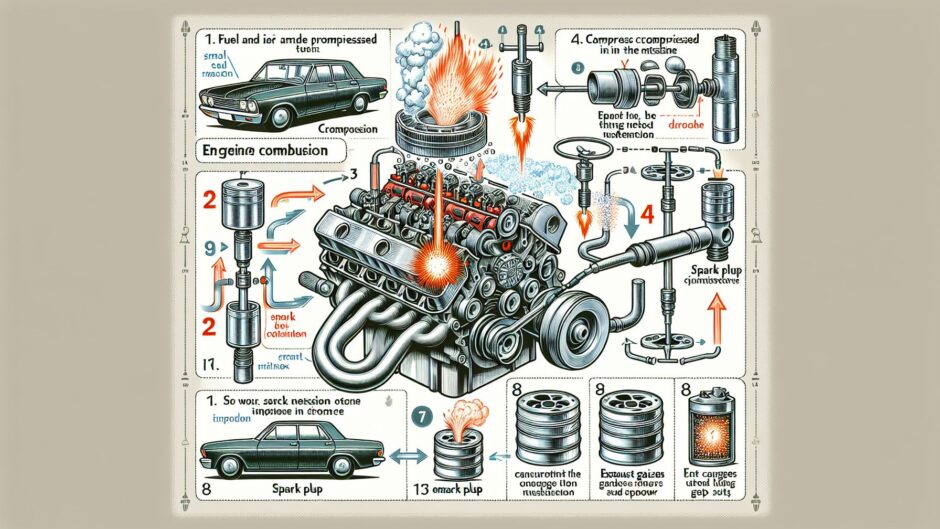
As a car owner, it’s important to have a basic understanding of how your vehicle’s engine works. One crucial aspect of engine operation is combustion, the process that powers your car and keeps it running smoothly. In this article, we’ll explore how engine combustion works in a way that’s easy to understand, so you can appreciate the inner workings of your vehicle.
The Basics of Engine Combustion
Engine combustion is the process of burning fuel to create the energy needed to power your car. In most vehicles, this combustion occurs in a series of small, controlled explosions within the engine cylinders. These explosions are orchestrated by spark plugs, which ignite a mixture of fuel and air to generate power.
When you start your car, the fuel pump sends gasoline from the tank to the engine, where it mixes with air in the combustion chamber. The spark plugs then create a spark that ignites this mixture, causing a controlled explosion. This explosion pushes the piston down, which in turn rotates the crankshaft and ultimately propels your car forward.
Importance of Proper Combustion
For your engine to run efficiently, it’s essential that combustion occurs at the right time and in the right way. If combustion is off, you may notice issues like decreased fuel efficiency, rough idling, or a lack of power. To ensure optimal combustion, it’s crucial to keep up with regular maintenance, including replacing spark plugs, fuel filters, and air filters as needed.
In addition to regular maintenance, using high-quality fuel and oil can also help improve combustion in your engine. Clean fuel and oil can prevent build-up in the combustion chamber and ensure that the spark plugs can ignite the fuel-air mixture effectively.
Understanding Combustion Cycles
Engine combustion typically occurs in four distinct stages, known as the intake, compression, power, and exhaust strokes. During the intake stroke, the piston moves down, drawing a mixture of air and fuel into the cylinder. In the compression stroke, the piston moves back up, compressing the mixture to create a more potent explosion.
The power stroke is where combustion takes place, with the spark plugs igniting the compressed fuel-air mixture to generate power. Finally, the exhaust stroke expels the leftover gases from the combustion process through the exhaust system. Understanding these four strokes can give you insight into how your engine operates and help you diagnose any potential issues that may arise.
Conclusion
Engine combustion is a complex yet essential process that keeps your car running smoothly. By understanding the basics of combustion and how it powers your vehicle, you can better appreciate the intricacies of your engine. Remember to prioritize regular maintenance and quality fuel to ensure optimal combustion and keep your car in top condition.
Next time you hit the road, take a moment to appreciate the marvel of engine combustion and the role it plays in getting you from point A to point B. Your car’s engine may be a complex machine, but with a bit of knowledge and care, you can keep it running smoothly for years to come. Happy driving!