Restoring a classic car can be a rewarding project for backyard mechanics who have a passion for vintage vehicles. Whether you’re looking to bring an old classic back to its former glory or simply want to learn more about automotive restoration, this guide will provide you with the necessary steps to successfully restore a classic car.
Introduction
Before diving into the restoration process, it’s important to gather the right tools and materials. Make sure you have a well-equipped garage or workspace, as well as access to a reliable source of information such as car clubs or experienced mechanics who can offer guidance and advice throughout the restoration process.
Body
Step 1: Assess the Condition
Start by thoroughly inspecting the car to determine the extent of damage or wear. Take note of any rust, dents, or missing parts that will need to be addressed during the restoration process. This assessment will help you create a realistic timeline and budget for the project.
Step 2: Create a Restoration Plan
Develop a detailed plan outlining the specific repairs and modifications that need to be made. This plan should include a timeline, budget, and list of necessary tools and materials. Consult with car clubs or experienced mechanics for advice on the best approach to restore your classic car.
Step 3: Disassemble the Car
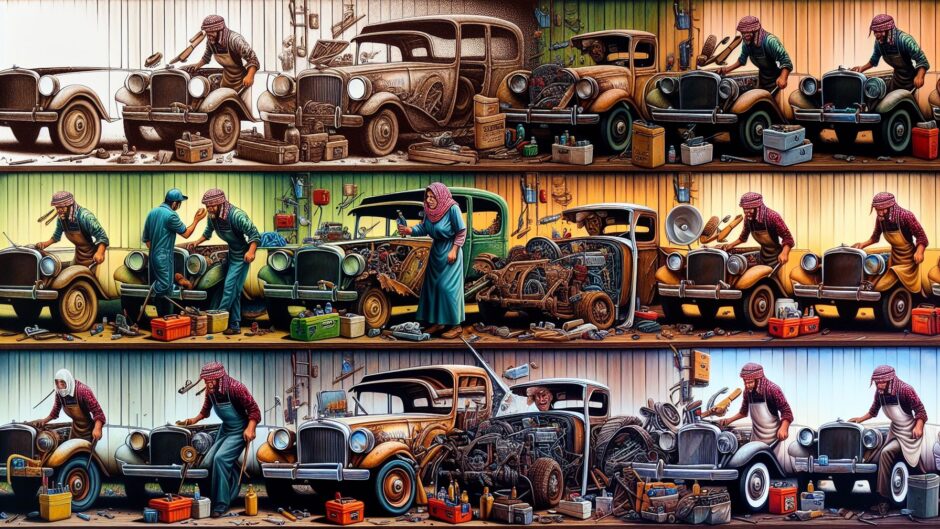
Carefully disassemble the car, taking care to label and organize all parts. This will make it easier to reassemble the car later on. Keep track of all hardware and components to ensure nothing gets lost during the restoration process.
Step 4: Repair and Replace Parts
Address any rust, dents, or damage to the body of the car. Replace any worn or damaged parts with new or refurbished components. Consult with car clubs or mechanics to find the best sources for replacement parts.
Step 5: Paint and Finish
Consult with automotive experts or experienced painters to determine the best paint and finish for your classic car. Take your time to ensure a quality paint job that will last for years to come. Consider enlisting the help of a professional for this step if you are not comfortable with painting.
Step 6: Reassemble the Car
Carefully reassemble the car, following your restoration plan and referring to any documentation or guides you have collected along the way. Take your time to ensure everything fits together properly and functions as it should.
Step 7: Test and Tune
Once the car is reassembled, test all components to ensure they are functioning correctly. Make any necessary adjustments or repairs to ensure the car runs smoothly and safely. Consult with car clubs or mechanics for guidance on tuning the engine and other mechanical systems.
Conclusion
Restoring a classic car can be a challenging but rewarding project for backyard mechanics. By following these steps and seeking guidance from car clubs and experienced mechanics, you can successfully restore a classic car to its former glory. Remember to take your time, be patient, and enjoy the process of bringing a vintage vehicle back to life.