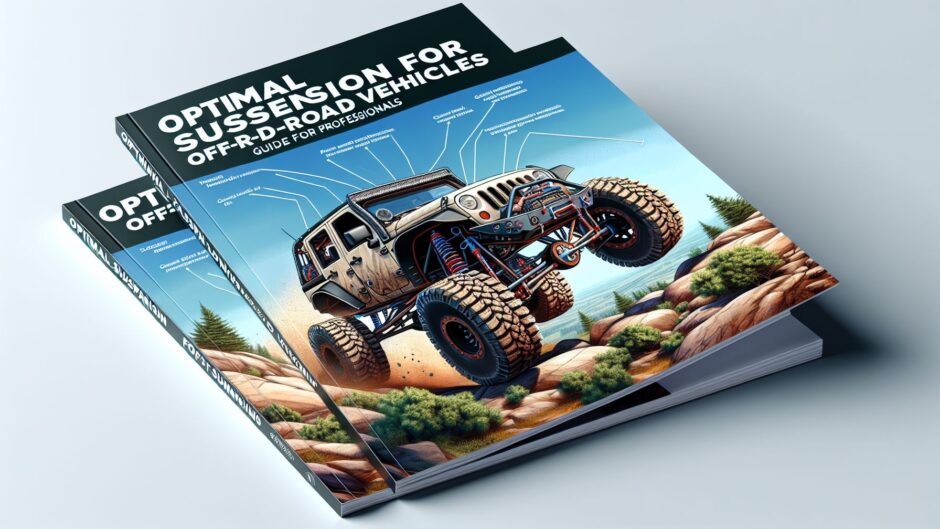
Suspension system in off-road vehicles has an important role to play in a vehicle’s ability to navigate challenging terrains confidently while also maintaining passenger comfort. For car collectors and professionals who obsess over the finer details of their 4×4 vehicles, the historical evolution and performance nuances of this critical component can be a fascinating journey. This blog delves into the dynamics of the best suspension systems specifically meant for off-road vehicles.
What is an Off-road Vehicle Suspension? An Overview
The suspension system of an off-road vehicle is designed to offer smooth ride, enhanced stability, handling, and control, especially during high-speed operations on rough terrains. When we talk about suspension in the automotive parlance, it includes a complex constellation of components such as springs, shock absorbers, linkages, bearings and precision-engineered joints that connect a vehicle to its wheels.
Off-road suspension systems are specifically designed to maintain an optimal level of traction between the tires and the terrain, which becomes more of a challenge as the driving surface becomes irregular or loose. For car collectors and serious off-roading enthusiasts, having an understanding of these dynamics can significantly augment the driving experience.
Elements of a Great Suspension for Off-road Vehicles
Understanding the best suspension for off-roaders entails considering the various elements that contribute to its overall performance. Here are the key components to account for:
1. Shocks and Springs
Shock absorbers and springs are what absorb the impact from the terrain, giving passengers a smooth ride. The best shocks for off-roading are typically longer and more robust, allowing for more wheel travel and better control. Coilovers are often a favorite among professionals and hardcore enthusiasts as they combine both springs and shock absorbers into one compact and efficient unit.
2. Control Arms
Control arms are components that connect the vehicle’s frame to the wheel assemblies. They maintain correct tire alignment and enable the vehicle to negotiate with difficult terrains effectively. Upgraded control arms designed for off-roading are sturdier and often adjustable, a attribute appreciated by most mechanics working on high-performance, off-road vehicles.
3. Bushings and Bearings
Bushings and Bearings are small but critical parts of the suspension system. They act as the pivot points that allow the various suspension components to move freely. Off-road upgrades often include materials like polyurethane or high-density rubber which offer improved durability and performance over standard rubber.
Investing in the Right Suspension System: A Conclusion
In conclusion, the best suspension system for an off-road vehicle is one that takes into account the above-listed factors, with robust shocks and springs, sturdy control arms, and durable bushings and bearings. While the suspension of each vehicle can bring its own unique nuances, professionals, including car collectors and mechanics, appreciate these nuances as it adds thrill to their off-road experiences.
Moreover, it is vital to bear in mind that what counts as the ‘best’ in terms of suspension system can vary greatly depending on individual needs, purpose of the vehicle and the nature of terrain usually being navigated. Hence, personalized evaluations and customization according to specific use cases become key.
Whether it’s for competitive sports, recreational usage, or simply to satisfy a craving for the examination of fine mechanics, investing in the right off-road suspension system can deliver tangible results in terms of comfort, control, and performance. And, after all, isn’t that the joy of any off-road adventure?